

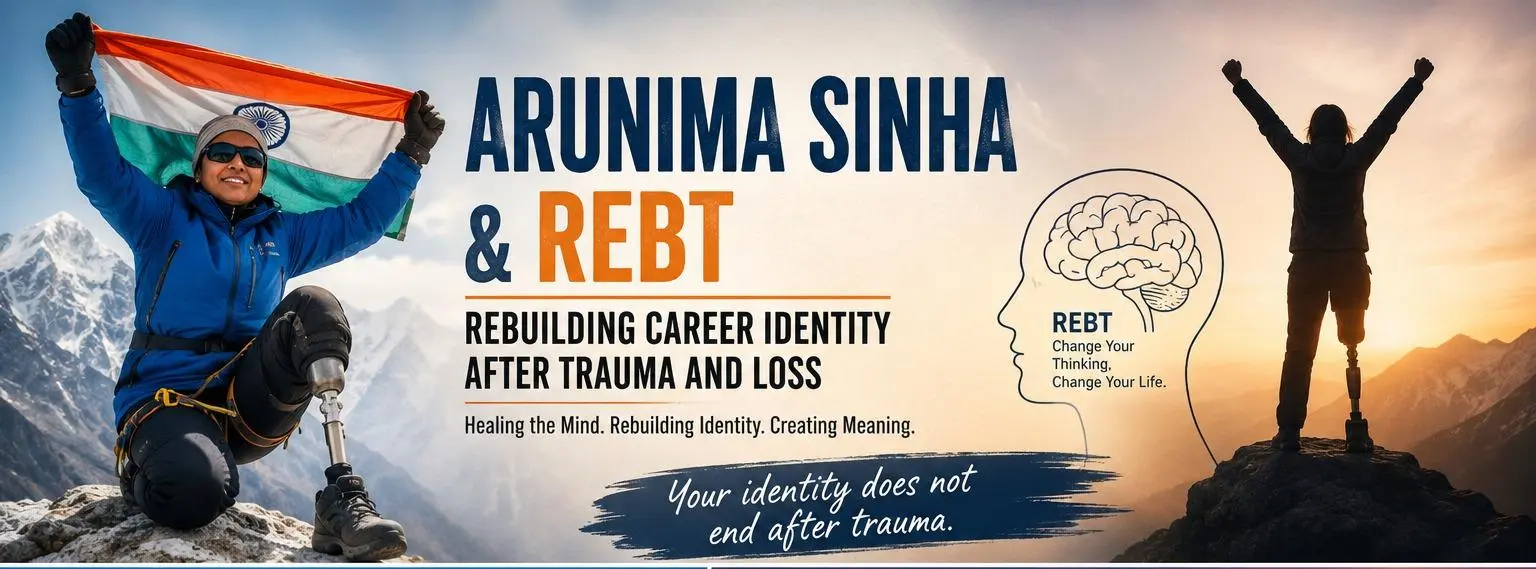
“Your Identity Does Not End After Trauma”
Sometimes life changes in one moment.
One accident.
One loss.
One painful event.
And suddenly, a person no longer recognizes their own life.
Trauma does not only affect the body.
It affects identity.
Many people after trauma silently ask themselves:
“Who am I now?”
“Can I still achieve something in life?”
“Will people only remember my pain?”
“Can my future still have meaning?”
This emotional struggle is something many people experience after life-changing events.
And the journey of Arunima Sinha gives one of the strongest real-life examples of rebuilding identity after trauma.
Arunima Sinha was once a national-level volleyball player whose life changed after a tragic train accident led to the loss of one of her legs. Physically, the trauma was painful. But emotionally, the challenge was even deeper.
Because after trauma, people are not only fighting pain.
They are fighting the fear that their life story has ended.
Society often starts looking at people through sympathy instead of potential. Slowly, many individuals begin believing that their identity has become limited by tragedy.
But some people rebuild themselves differently.
And psychologically, this process is extremely powerful.
Understanding Trauma Through REBT
According to Rational Emotive Behavior Therapy, emotional suffering is not created only by situations, but also by beliefs developed after those situations.
After trauma, many people naturally develop thoughts like:
- “My life is over.”
- “I can never succeed again.”
- “People will only see my weakness.”
- “I have lost my future.”
These beliefs slowly affect:
- confidence,
- motivation,
- emotional stability,
- and career identity.
REBT explains that healing begins when people start challenging these painful beliefs instead of accepting them as permanent truth.
This does not mean ignoring pain.
It means learning that pain does not have to define an entire identity.
What makes Arunima Sinha’s journey emotionally powerful is that she did not only recover physically — she rebuilt purpose. Instead of allowing trauma to become her final identity, she created a completely new vision for herself.
She eventually became the first female amputee to climb Mount Everest.
But psychologically, the achievement represents something even bigger.
It represents reclaiming identity after life tries to break it.
Today, many young people experience emotional trauma in different forms:
- academic failure,
- disability,
- rejection,
- family struggles,
- emotional neglect,
- or sudden life changes.
And after these experiences, many students begin disconnecting from career goals and personal dreams because internally they feel:
“I am no longer capable.”
This is where emotional support and career counselling become deeply important.
Because after trauma, people do not only need motivation.
They need help rebuilding belief in themselves again.
One of the most dangerous effects of trauma is that people slowly stop imagining a future for themselves. They survive daily life, but emotionally they stop dreaming.
And this is why stories like Arunima Sinha matter so deeply in psychology.
Not because they are “perfect success stories.”
But because they show that identity can be rebuilt even after immense emotional pain.
REBT teaches something extremely important:
A painful event may change life, but it does not automatically define a person’s worth, future, or capability forever.
And emotionally, this understanding can completely transform healing.

Leave a Comment
To post comment, please